
Jnana Mudra
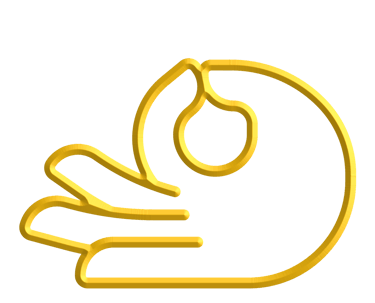
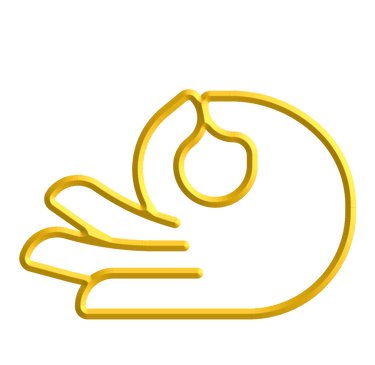
Jnana Mudra is one of the most foundational and recognised mudras in yogic and meditative traditions. The Sanskrit word “Jnana” means knowledge or wisdom. This gesture symbolises the pursuit and transmission of spiritual insight, representing the union of individual consciousness with universal wisdom.
Origins in Ancient India:
nana Mudra’s roots stretch deep into early Vedic and yogic practices, where it was used by sages and ascetics to aid concentration, meditation, and the awakening of higher knowledge. Ancient texts and sculptures show teachers and spiritual practitioners seated in meditation with this hand position, establishing it as a mark of contemplation and learning.
Spread and Evolution Across Asia:
As Hindu and later Buddhist teachings spread across India, Tibet, and Southeast Asia, Jnana Mudra became the classic symbol for meditation, inner silence, and direct transmission of wisdom. In Buddhist iconography, this mudra is often seen on statues of the Buddha and enlightened beings in deep meditation, symbolising clarity and enlightenment. Its form is mirrored in other traditions as Chin Mudra, though there are subtle differences in symbolism and intention.
Symbolic Meaning and Subtle Variations:
Jnana Mudra is performed by joining the tip of the index finger with the tip of the thumb, creating a circle that represents the unity of self (index finger) with universal consciousness (thumb). The other fingers remain extended but relaxed, representing the transcendence of ego, intellect, and worldly attachments. In some schools, the palm faces upward for receptivity (Jnana Mudra), while facing downward (Chin Mudra) is seen as grounding wisdom in the body.
How to Perform Jnana Mudra
Sit comfortably with your spine straight and shoulders relaxed. Rest your hands on your knees or thighs. Touch the tip of your index finger to the tip of your thumb, forming a gentle circle. Extend the other three fingers straight but relaxed. The palms may face upward for openness to higher knowledge, or downward for grounding, depending on your intent or tradition. Close your eyes and focus on the breath or a point between the eyebrows, letting the gesture anchor your awareness and support concentration.
When and Why to Use Jnana Mudra
Use Jnana Mudra in meditation, pranayama (breathwork), or moments of study and contemplation. This mudra helps focus the mind, awaken insight, and encourage inner stillness. It is especially helpful for enhancing clarity, memory, and receptivity during spiritual or philosophical inquiry. Practitioners use it to access deeper layers of consciousness and to remind themselves of the ever-present link between personal understanding and universal wisdom.
Symbolic Appearances and Variations
Jnana Mudra is frequently depicted in statues and paintings of sages, rishis, and the Buddha in meditation. It appears in Hindu, Buddhist, and Jain art as a universal sign of enlightenment and learning. Some traditions emphasise the circle as a sign of perfection or unbroken consciousness, while others see it as the cycle of life and liberation. Subtle differences in finger extension or palm orientation distinguish Jnana Mudra from similar gestures like Chin Mudra.
Energetic and Psychological Effects
Practicing Jnana Mudra is said to harmonise the flow of prana (life energy), enhance mental clarity, and stabilise the nervous system. The closed circuit of thumb and finger is believed to redirect energy inward, supporting deeper states of meditation and absorption. Many find it fosters equanimity, heightened perception, and a sense of unity with all existence.
Cultural Notes and Wider Influence
Jnana Mudra remains a foundational gesture in yoga, meditation, and spiritual teaching worldwide. Its influence is seen in Eastern and Western mindfulness practices, where it is used for calming the mind, centring awareness, and evoking the spirit of inquiry. The gesture’s timeless symbolism—knowledge, unity, and transcendence—continues to inspire seekers and teachers across cultures and generations.