
The Origins
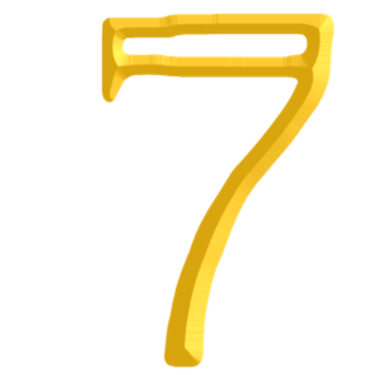
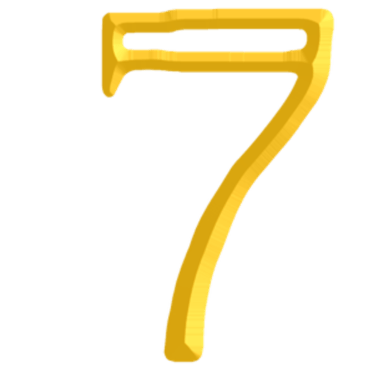
7 is the number of wisdom, mystery, and spiritual insight—the seeker’s path through the layers of existence. Where six brought harmony and integration, seven steps beyond the known to explore the hidden, the mystical, and the eternal. Ancient cultures revered seven as a sacred and powerful force: the sum of spirit and matter (three plus four), the seven days of creation, the seven heavens, the seven visible celestial bodies, and the seven directions (including centre). In sacred geometry, seven shapes the heptagon and the unfolding spiral, the journey toward knowledge, enlightenment, and transcendence. Seven is the philosopher, the hermit, the priestess, and the scientist—those who seek understanding beyond the surface of things.
Global Use of Seven
Africa
Ta-Mery / Kemet (Ancient Egypt): Seven was considered a symbol of perfection and effectiveness, associated with the seven sacred oils, the seven wise ones, and the cycles of rebirth and regeneration. It featured in magical texts, temple rituals, and the myths of Osiris and Ra, marking stages of initiation and spiritual ascent.
Asia
West Asia – Sumer / Mesopotamia (Babylon): In Sumer and Babylon, seven was sacred—the number of major planets, the seven sages, and the seven gates of the underworld. It structured their mythology, astronomy, and the cycles of fate and destiny.
South Asia – Bharata / Hindustan (Ancient India): In India, seven is sapta—the seven chakras, the seven rivers (sapta sindhu), the seven rishis (sages), and the seven sacred flames. Seven forms the core of spiritual and cosmological systems, symbolising the steps to liberation and the fullness of life.
East Asia – Zhongguo / Huaxia / Shénzhōu (Ancient China): In China, seven is qī (七), symbolising the seven stars of the Big Dipper, the seven emotions, and the seven stages of life. Seven is the key to lunar and agricultural cycles, and a number of both joy and reflection in festivals and folklore.
Americas
Maya (Mesoamerica): The Maya used seven dots for seven and aligned it with the sacred centre—the world tree surrounded by the six directions. Seven featured in their calendar counts, the construction of pyramids, and the cycles of prophecy and renewal.
Europe:
In Europe, seven is woven into myth and religion: the seven classical planets, the seven virtues and sins, the seven wonders, and the seven notes of the musical scale. It is the alchemist’s number, the journey through seven stages of transformation, and the key to stories of magic, fate, and spiritual attainment.
Modern Global Impact:
Seven is everywhere in contemporary science, culture, and psychology—from the seven colours of the rainbow and the periodicity of the week, to the major musical modes, to key cycles in biology and memory. It is the number of exploration, reflection, and the search for deeper meaning in an ever-expanding universe.
Agreeable connotations: Intuition, wisdom, depth, introspection, analytical skill, spiritual awareness, perception, research, mastery, independence, insight, understanding, imagination, discovery, originality, discernment, the courage to seek truth, and the capacity for reflection and enlightenment.
Disagreeable Connotations: Isolation, secrecy, aloofness, over-analysis, cynicism, withdrawal, suspicion, escapism, emotional detachment, melancholy, arrogance, obsession, or the risk of getting lost in thought and missing connection with others.