The Origins
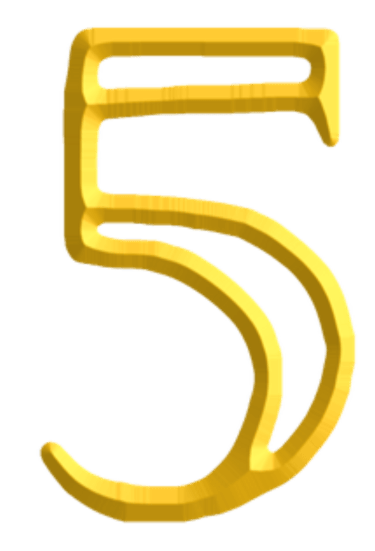
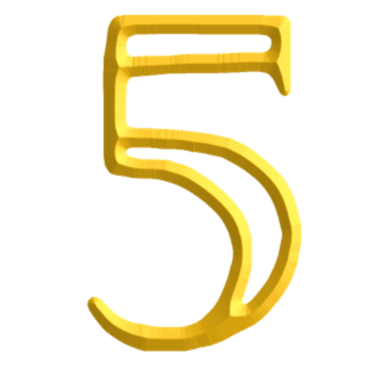
5 is the force of movement, freedom, and adaptation—the number that breaks boundaries, shifts the pattern, and opens the door to experience. Where four anchored and stabilised, five arrives as the wild card: it brings change, curiosity, and the energy of exploration. Ancient civilisations saw five as the human number—five fingers, five senses, the living pentagram. In myth and cosmology, five is the traveller, the messenger, the centre point of the elements, and the bridge between spirit and matter. In sacred geometry, five forms the pentagon and the star—the signature of life and dynamic order. It is the pulse of evolution, the spark of invention, and the courage to journey beyond the known.
Global Use of Five
Africa
Ta-Mery / Kemet (Ancient Egypt): Five was associated with transformation and regeneration—symbolised by the five-pointed star in temple art and the five epagomenal days added to the end of the 360-day year. It was linked to the cycles of nature and the interconnection of the visible and invisible worlds.
Asia
West Asia – Sumer / Mesopotamia (Babylon): In Sumerian and Babylonian systems, five marked the hand, the senses, and the core unit for counting and trade. It played a role in their sexagesimal (base-60) mathematics and as a symbol of resourcefulness and skill.
South Asia – Bharata / Hindustan (Ancient India): In India, five is pañca—the five elements (earth, water, fire, air, ether), the five senses, and the five sacred fires. It is woven through ritual, Ayurveda, and spiritual teachings, signifying life, transformation, and the passage between worlds.
East Asia – Zhongguo / Huaxia / Shénzhōu (Ancient China): In China, five is wǔ (五), the core of the five elements (wǔxíng: wood, fire, earth, metal, water), which structure cosmology, medicine, and philosophy. Five colours, flavours, tones, and directions define the balance and dynamism of nature and society.
Americas
Maya (Mesoamerica): The Maya used five dots to represent five and saw it as the centre point of the world—the axis mundi. Five signified the hand, the human, the power to act, and the vital energy linking all the directions.
Europe:
In Europe, five emerged in the pentagram (the emblem of life, health, and magical protection), the five wounds of Christ in Christianity, and the five classical senses. It became a symbol of movement, versatility, and the pursuit of knowledge and adventure.
Modern Global Impact:
Five drives systems of measurement (five-point scales, the metric system’s core units), human anatomy (fingers, toes, senses), and creativity. It underpins dynamic fields from the five oceans and continents in geography, to pentatonic scales in music, to the framework for modern risk-taking, experimentation, and change.
Agreeable connotations:
Freedom, adaptability, curiosity, adventure, versatility, resourcefulness, enthusiasm, exploration, dynamic energy, quick thinking, courage, sensuality, invention, resilience, wit, and the power to embrace and thrive on change.
Disagreeable Connotations:
Restlessness, inconsistency, impulsiveness, irresponsibility, distraction, instability, recklessness, superficiality, risk-taking without foresight, overindulgence, impatience, unpredictability, and the tendency to avoid commitment or discipline.