The Origins
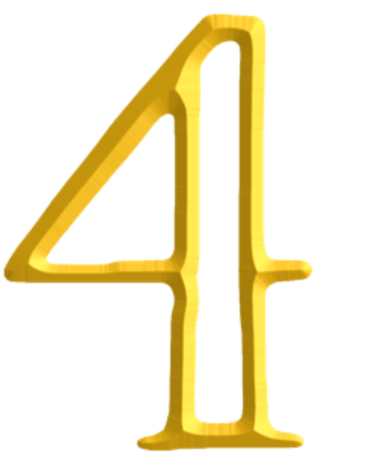
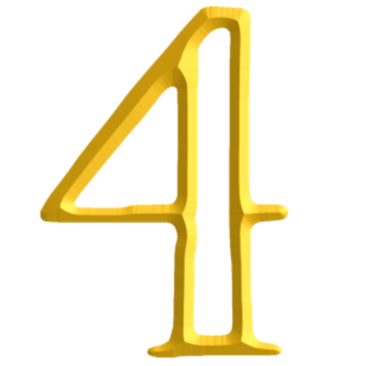
4 is the number of foundation, order, and stability—the architect of the material world. Where three brings movement and creation, four brings structure, boundaries, and completion. It is the number of the square, the four elements, the four directions, and the four seasons. Across civilisations, four was seen as the essential anchor that transforms potential into permanence, chaos into cosmos, and vision into reality. In myth and geometry, four marks the first true enclosure, symbolising protection, containment, and the creation of sacred space. Four is the rhythm of cycles, the rule of law, and the cornerstone of lasting achievement—the power behind the builder, the judge, and the guardian of all order.
Global Use of Four
Africa
Ta-Mery / Kemet (Ancient Egypt): Four was sacred as the sign of completeness—symbolised by four pillars, four winds, four sons of Horus, and the four cardinal points. It marked the boundaries of creation, the four legs of the sky goddess Nut, and the solid base upon which Ma’at (order) stands.
Asia
West Asia – Sumer / Mesopotamia (Babylon): In Sumerian and Babylonian culture, four stood for the cardinal directions and the great cities of civilisation. It was the number of totality and order, reflected in the four corners of the ziggurat and the structure of their cosmology.
South Asia – Bharata / Hindustan (Ancient India): In Indian philosophy, four is catur—the sacred number of the Vedas (the four Vedas), the four aims of life (purusharthas), the four stages of existence (ashramas), and the four castes (varnas). Four is the square, the cross, and the ground upon which rituals, temples, and lives are built.
East Asia – Zhongguo / Huaxia / Shénzhōu (Ancient China): In China, four is sì (四), represented by the character with four sides, symbolising the earth, the four directions, and the cycles of time. It marks boundaries, order, and the cycles of the seasons and is central to architectural and cosmic design.
Americas
Maya (Mesoamerica): The Maya used four dots to represent four, encoding the world’s four corners, the four Bacabs who uphold the sky, and the fourfold structure of their sacred calendar. Four signified completeness, direction, and the building blocks of both society and cosmology.
Europe:
In Europe, four is the emblem of the material world—the four elements, the four temperaments, the four cardinal virtues, and the four corners of the earth. From the cross in Christian symbolism to the square in architecture and measurement, four is the marker of order, integrity, and grounded achievement.
Modern Global Impact:
Four is the backbone of calendars, clocks, and systems of measurement. It shapes how we build, plan, and regulate societies. In science and technology, four emerges in everything from the four fundamental forces of nature to the logic of stability and the blueprint for lasting creation. It is the number that underpins security, regulation, and enduring structure in every aspect of modern life.
Agreeable connotations:
Practicality, reliability, discipline, organisation, security, endurance, responsibility, diligence, perseverance, loyalty, hard work, honesty, mastery of detail, stability, the power to build, and the ability to create and sustain lasting achievements.
Disagreeable Connotations:
Rigidity, stubbornness, narrow-mindedness, pessimism, limitation, dogmatism, restriction, inflexibility, workaholism, dullness, conservatism, fear of change, resistance to innovation, and the tendency to become trapped in routines or bureaucracy.