The Origins
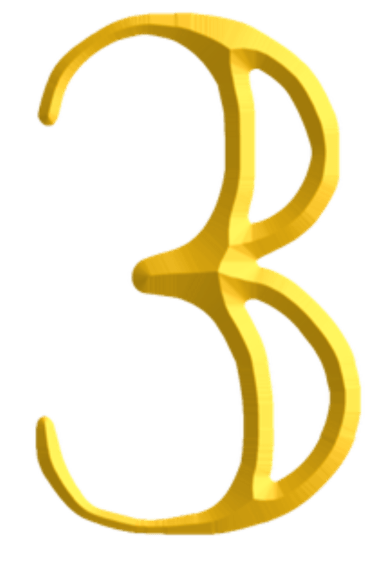
3 is the principle of synthesis, the power that reconciles opposites and births new creation. It is the trinity that completes the binary, the child of two parents, the spark that leaps between points and forms a triangle—the first true shape. Ancient minds saw three as the number of movement, fertility, and resolution. Where two creates tension, three resolves it, weaving together the threads of life, consciousness, and growth. Three is the story, the pattern, and the rhythm of the cosmos. In philosophy, myth, and sacred geometry, it symbolises the dynamic interplay of force, form, and function—the eternal cycle of creation, preservation, and transformation. In spiritual traditions, three embodies the mystery of triads, trinities, and the ever-unfolding spiral of becoming.
Global Use of Three
Africa
Ta-Mery / Kemet (Ancient Egypt): Three in Kemet was represented by three vertical strokes, often seen as the sign of plurality and abundance. It was sacred to the neteru (gods) in triads—such as Osiris, Isis, and Horus—symbolising the generative principle, the family, and the completed cycle. Three denoted completeness, expansion, and the first step beyond opposition.
Asia
West Asia – Sumer / Mesopotamia (Babylon): In Sumerian and Babylonian tradition, three marked the beginning of pattern and law. The gods were grouped in threes, and many legal, calendrical, and ritual systems were built on the power of the triad, seeing three as a foundation for order and story.
South Asia – Bharata / Hindustan (Ancient India): In India, three is traya—the sacred triad of Brahma, Vishnu, and Shiva, as well as the three gunas (sattva, rajas, tamas) underlying all creation. The triangle is the first true geometric figure, and three forms the core of all Vedic and Tantric cosmology, representing the cycle of creation, maintenance, and dissolution.
East Asia – Zhongguo / Huaxia / Shénzhōu (Ancient China): Chinese philosophy reveres three as san (三), depicted by three parallel lines and symbolising heaven, earth, and humanity—the cosmic trinity. In Daoism, three is the principle that completes the universe: "The Dao gives birth to One, One to Two, Two to Three, and Three to the ten thousand things." Three is the pivot, the turning point, and the harmonious middle.
Americas
Maya (Mesoamerica): The Maya used three dots, building further upon their base-20 system, and many of their cycles, deities, and calendar counts are structured in threes. Three is the axis around which the sacred calendar revolves, and the marker of stability, growth, and the power to manifest.
Europe:
In Europe, three forms the basis of countless myths, rituals, and philosophies—the Triple Goddess, the Holy Trinity, the tripartite soul, and the three Fates. Three is enshrined in law (the rule of three), storytelling (beginning, middle, end), and art (triangle, balance, composition). It marks the leap from polarity to structure and flow.
Modern Global Impact:
Three is the heartbeat of narrative, rhythm, and structure in the modern world: from science (the three dimensions of space) and mathematics (triangle as the strongest shape), to psychology (id, ego, superego), and daily life (birth, life, death). It underpins the principles of growth, creativity, and dynamic resolution everywhere humans seek meaning.
Agreeable connotations: Creativity, communication, sociability, optimism, inspiration, self-expression, growth, joy, imagination, versatility, humour, vision, abundance, enthusiasm, charm, artistic flair, spontaneity, the power of synthesis, and the ability to connect and uplift others.
Disagreeable Connotations: Superficiality, scattered focus, exaggeration, inconsistency, distraction, over-indulgence, restlessness, carelessness, mood swings, immaturity, unreliability, avoidance of depth, or using wit to deflect from truth and responsibility.